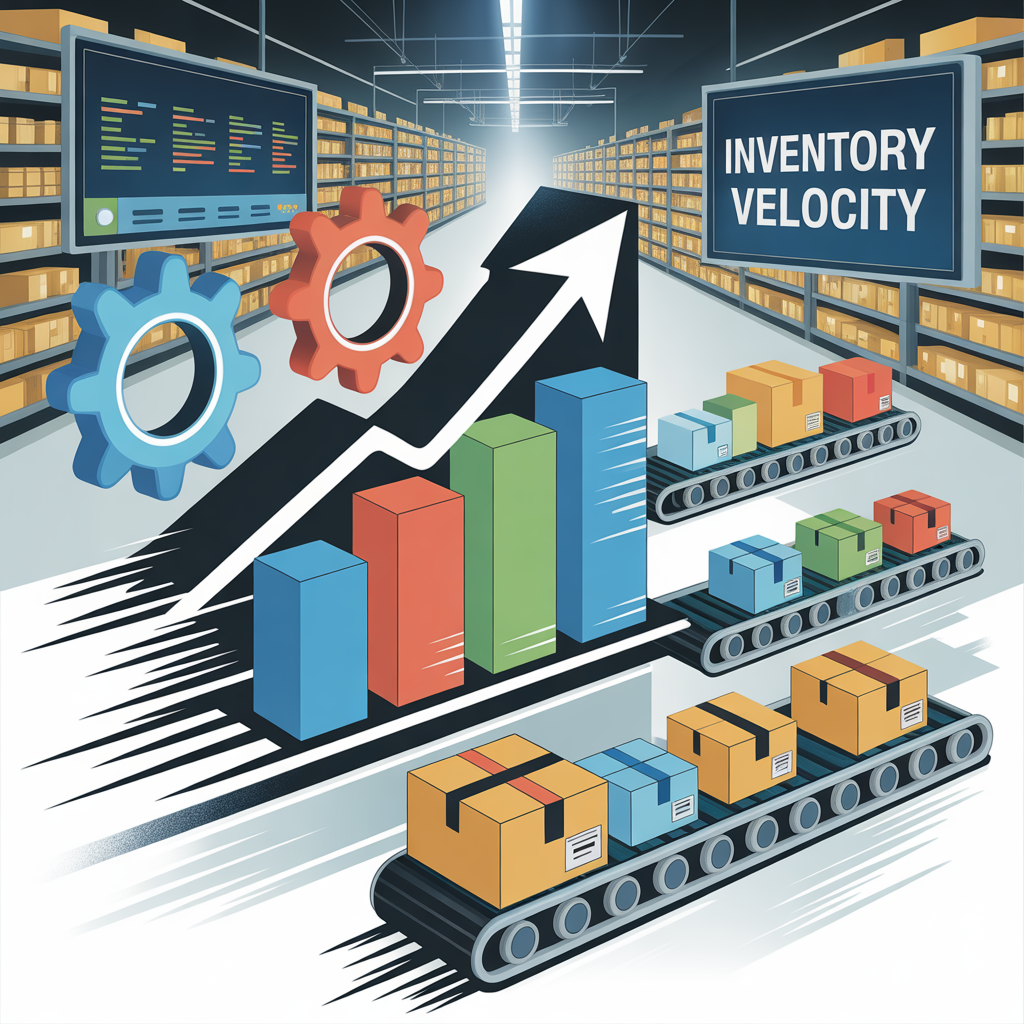
The Inventory Velocity Playbook
Turn Inventory Into Cash Faster—Without Stockouts or Overbuying
Overview
This playbook gives you a precision system for controlling how fast your inventory moves—so you can free up cash, increase sales, and eliminate dead stock.
Instead of guessing what to reorder or discount, you’ll operate based on velocity, timing, and data-driven decisions.
SECTION 1: The Core Concept — Inventory Velocity
👉 Inventory Velocity = How fast your products sell over time
This is the metric that separates:
- Cash-generating inventory ✅
- Cash-trapping inventory ❌
The Key Formula:
- Sales Velocity = Units Sold ÷ Time Period
Example:
- 100 units sold over 20 days
👉 Velocity = 5 units/day
Why This Matters:
- Predict stockouts BEFORE they happen
- Time reorders perfectly
- Avoid overstocking slow movers
SECTION 2: The 4 Inventory Speed Categories
Classify every product into one of these:
-
Fast Movers (High Velocity)
- Selling quickly and consistently
👉 Action:
- Reorder aggressively
- Increase visibility
- Consider price increases
-
Steady Movers (Moderate Velocity)
- Consistent but not explosive
👉 Action:
- Maintain stock levels
- Test small optimizations
-
Slow Movers (Low Velocity)
- Selling inconsistently
👉 Action:
- Improve merchandising
- Bundle with best sellers
-
Dead Stock (Near Zero Velocity)
- Barely selling
👉 Action:
- Mark down strategically
- Liquidate if needed
SECTION 3: The Velocity-Based Reordering System
Stop guessing when to reorder—use this:
Step 1: Calculate Daily Sales Velocity
- Units sold (last 30 days) ÷ 30
Step 2: Determine Lead Time
- How long it takes to receive new stock
Step 3: Calculate Reorder Point
👉 Reorder Point = Daily Velocity × Lead Time
Example:
- Velocity = 4 units/day
- Lead time = 10 days
👉 Reorder Point = 40 units
👉 When stock hits 40 units → reorder immediately
SECTION 4: Weeks of Supply (Your Inventory Lifespan)
Formula:
- Weeks of Supply = Current Inventory ÷ Weekly Sales
Interpretation:
- < 2 weeks: Risk of stockout
- 2–6 weeks: Healthy range
- 6+ weeks: Overstock risk
👉 This tells you how long your inventory will last.
SECTION 5: The Velocity Optimization Framework
Step 1: Increase Speed of Winners
- Improve visibility
- Increase stock levels
- Raise prices slightly
Step 2: Fix Slow Movers
- Reposition products
- Bundle strategically
- Test pricing adjustments
Step 3: Eliminate Dead Weight
- Mark down aging inventory
- Stop reordering poor performers
👉 Focus on flow, not just volume
SECTION 6: The Weekly Velocity Control System
Run this every week:
-
Update Velocity for Top SKUs
- Track changes in speed
-
Identify Stock Risks
- Fast movers → stockout risk
- Slow movers → overstock risk
-
Adjust Orders
- Increase orders for high velocity
- Reduce or stop low velocity
-
Take Action
- Reorder, bundle, or discount
👉 Keep inventory aligned with demand
SECTION 7: Advanced Insight — The Cash Flow Loop
Inventory velocity directly impacts cash flow.
Fast Velocity:
- Inventory → Sales → Cash → Reinvest
Slow Velocity:
- Inventory → Stuck → No cash → No growth
👉 Faster cycles = faster growth
SECTION 8: Velocity Tracking Sheet (Fill-In Template)
Per Product:
- Product Name: __________
- Units Sold (30 Days): __________
- Daily Velocity: __________
- Current Inventory: __________
- Weeks of Supply: __________
- Reorder Point: __________
👉 Use this to manage every SKU like a pro
SECTION 9: High-Impact Velocity Moves
- Prioritize shelf space for fast movers
- Limit buying on unproven products
- Reduce SKU clutter
- Focus on top 20% of products driving 80% of sales
👉 Simplification increases speed
Usage Tips / Advanced Applications
- Use weekly for tight control
- Apply per category for deeper insights
- Combine with OTB planning for full inventory control
- Use before large buying decisions
Wrap-Up
Inventory isn’t about how much you have—it’s about how fast it moves.
This playbook gives you the tools to accelerate inventory flow, free up cash, and eliminate the hidden inefficiencies that slow down your business.
Use this asset to instantly shortcut inventory guesswork, optimize stock decisions, and operate with the precision of a high-level retail operator.