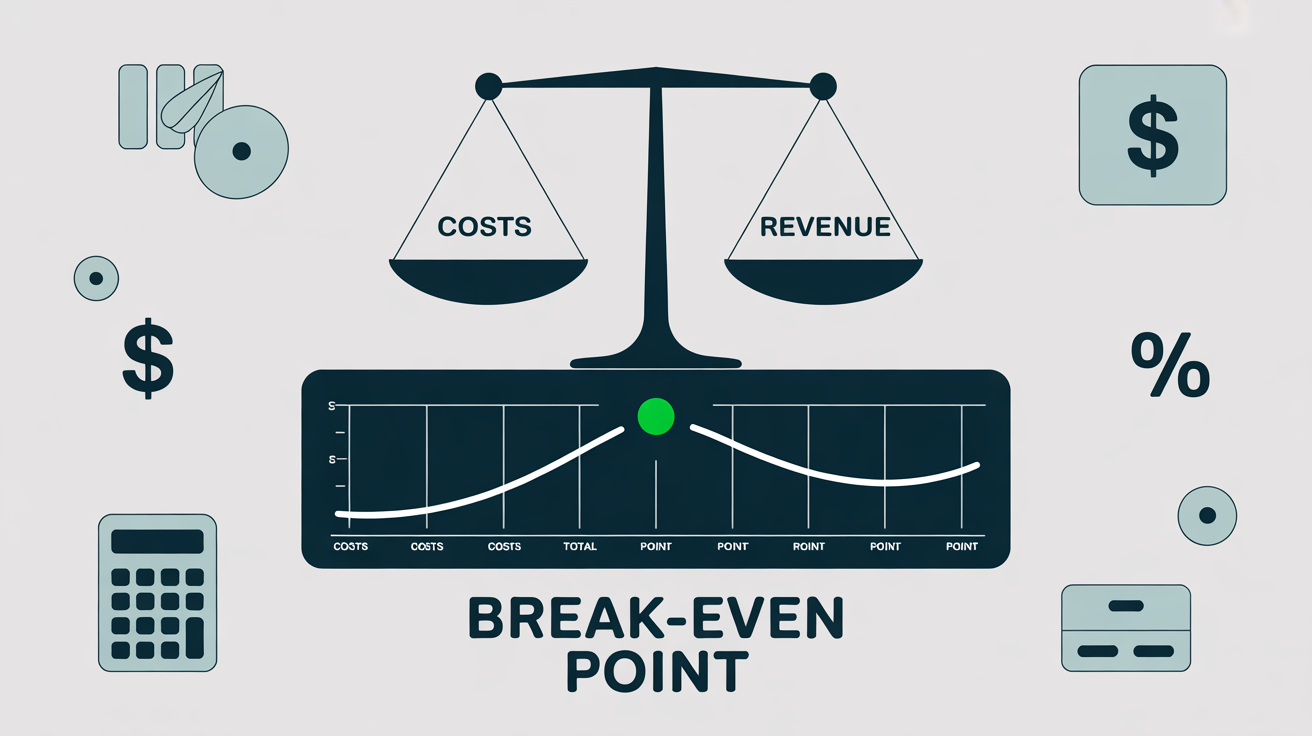
The Retail Break-Even Mastery Cheat Sheet
Know Exactly How Much You Need to Sell to Survive, Stabilize, and Scale
Overview
This is your clarity tool for one of the most important (and misunderstood) numbers in retail: break-even.
Once you master this, you stop guessing, stop stressing, and start making decisions with total confidence—because you know exactly where profit begins.
SECTION 1: The Core Break-Even Formula
This is your financial survival line.
Break-Even Point (Revenue):
Break-Even Sales = Fixed Costs ÷ Gross Margin %
What This Means:
- Fixed Costs: Rent, salaries, utilities, software, etc.
- Gross Margin %: Your profit after cost of goods
Example:
- Fixed Costs = $20,000/month
- Margin = 50%
👉 Break-Even = $40,000 in sales
👉 Below this = losing money
👉 Above this = making profit
SECTION 2: Fill-in-the-Blank Break-Even Calculator
Step 1: Monthly Fixed Costs
- Rent: $__________
- Salaries: $__________
- Utilities: $__________
- Marketing: $__________
- Other Expenses: $__________
👉 Total Fixed Costs = $__________
Step 2: Gross Margin
- Average Margin %: __________
Step 3: Break-Even Sales
👉 Break-Even Revenue = $__________
SECTION 3: Units-Based Break-Even (Product-Level Clarity)
Sometimes you need to know:
👉 “How many units do I need to sell?”
Formula:
Break-Even Units = Fixed Costs ÷ Profit Per Unit
Example:
- Fixed Costs = $20,000
- Profit per unit = $20
👉 Break-Even = 1,000 units
👉 This is powerful for planning sales targets.
SECTION 4: The Break-Even Reality Check
Ask Yourself:
- Are you consistently above break-even?
- How far above?
- How often do you drop below?
Warning Signs:
- Barely hitting break-even each month
- Heavy reliance on promotions to get there
- No margin for error
👉 This means your business is fragile.
SECTION 5: The 3 Ways to Lower Your Break-Even Point
-
Reduce Fixed Costs
- Negotiate rent
- Optimize staffing
- Cut unnecessary expenses
👉 Immediate impact
-
Increase Margin
- Raise prices
- Reduce discounting
- Improve supplier costs
👉 Most powerful lever
-
Improve Product Mix
- Sell more high-margin items
- Eliminate low-profit SKUs
👉 Smarter selling, not more selling
SECTION 6: The Break-Even Expansion Trap
Many retailers scale too early.
Scenario:
- You open a new location
- Fixed costs double
👉 Break-even doubles instantly
Checklist Before Expanding:
- ☐ Current store consistently profitable
- ☐ Strong margin buffer
- ☐ Predictable sales
👉 If not → expansion increases risk, not growth
SECTION 7: The “Safety Zone” Framework
Break-even is NOT your goal.
Define 3 Zones:
- ❌ Danger Zone: Below break-even
- ⚠️ Survival Zone: Just above break-even
- ✅ Profit Zone: 20–30%+ above break-even
👉 Your goal = stay in the profit zone
SECTION 8: Daily Break-Even Tracking
Daily Target Formula:
Daily Break-Even = Monthly Break-Even ÷ Days Open
Example:
- Monthly BE = $40,000
- Open 30 days
👉 Daily Target = $1,333/day
👉 Now you know EXACTLY what you need every day.
SECTION 9: Advanced Insight — The Margin Multiplier Effect
Small margin improvements = massive impact.
Example:
- Margin increases from 50% → 55%
👉 Break-even drops significantly
Why This Matters:
- Less pressure to sell
- More room for profit
- More stability
👉 Margin is your hidden advantage
SECTION 10: Your Break-Even Action Plan
Step 1: Calculate Your Break-Even
👉 __________
Step 2: Compare to Current Sales
👉 Above / Below
Step 3: Identify Weak Point
- Costs too high?
- Margins too low?
Step 4: Take One Action
👉 __________
👉 Simplicity = execution
Usage Tips / Advanced Applications
- Review monthly for financial clarity
- Use before hiring or expanding
- Combine with pricing strategy
- Track daily for real-time control
Wrap-Up
Break-even isn’t just a number—it’s your line between stress and control.
Once you understand it, you stop operating blindly and start making confident, strategic decisions that protect your business and unlock real growth.
Use this asset to instantly shortcut financial uncertainty, gain clarity on your targets, and operate your retail business with the precision of a seasoned operator.