Fill-in-the-Blank Open-to-Buy Planning Template Pack
Control Your Inventory, Protect Your Cash, and Buy With Confidence—Not Guesswork
Overview
This is your simplified, plug-and-play Open-to-Buy (OTB) system—designed to help you plan inventory, control spending, and avoid overstocking or stockouts.
No complex spreadsheets required. Just fill in the blanks and instantly know how much you can (and should) buy.
SECTION 1: The Open-to-Buy Formula (Your Control Lever)
At its core, OTB answers one critical question:
👉 “How much inventory can I afford to purchase right now?”
Core Formula:
Open-to-Buy = Planned Sales + Planned Ending Inventory – Beginning Inventory – On-Order Inventory
What Each Piece Means:
- Planned Sales: What you expect to sell this period
- Planned Ending Inventory: What you want left at the end
- Beginning Inventory: What you currently have
- On-Order Inventory: Stock already coming in
👉 This formula prevents overbuying and protects your cash flow.
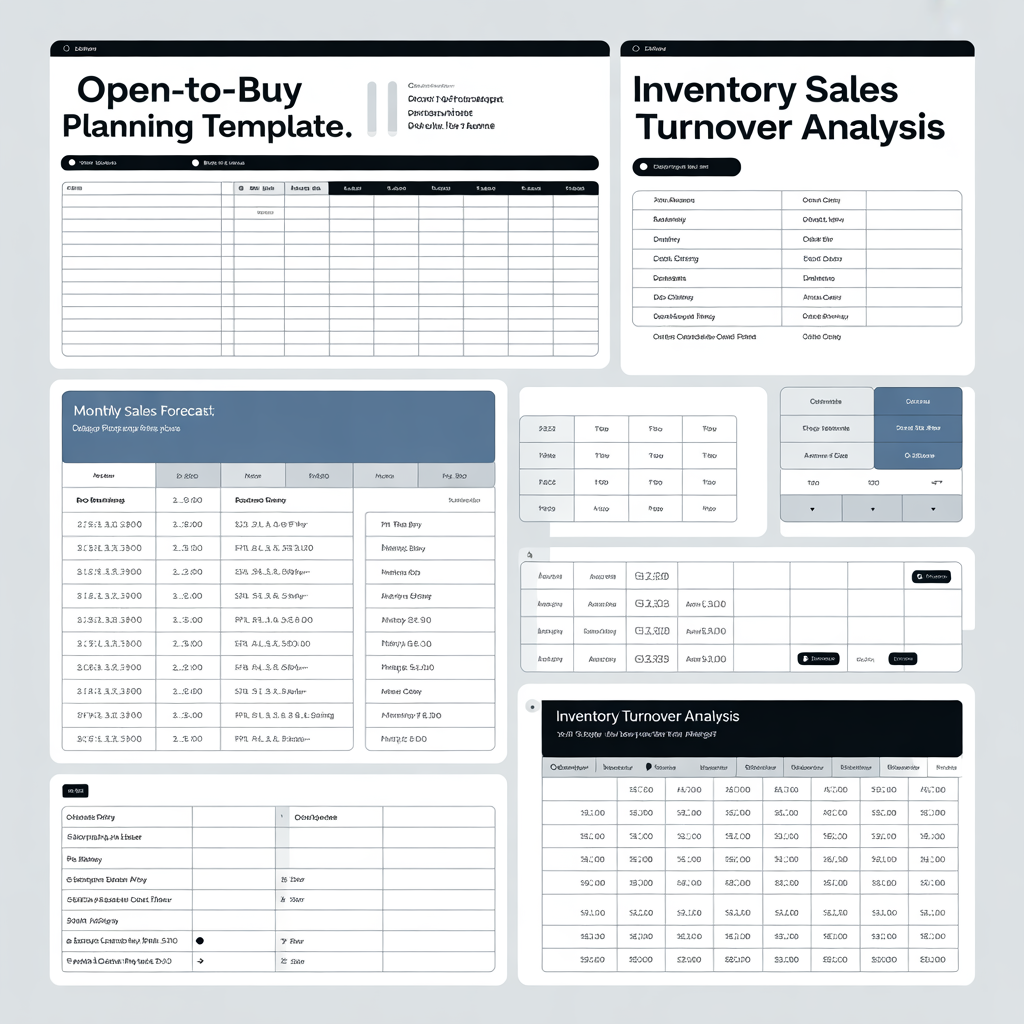
SECTION 2: Fill-in-the-Blank OTB Planner (Monthly)
Use this every month (or weekly for tighter control):
Step 1: Sales Plan
- Planned Monthly Sales: $__________
- Growth Target (%): ________
- Adjusted Sales Plan: $__________
Step 2: Inventory Target
- Desired Ending Inventory: $__________
👉 (Rule of thumb: 1–2 months of sales depending on your model)
Step 3: Current Position
- Beginning Inventory: $__________
- On-Order Inventory: $__________
Step 4: Calculate Your OTB
👉 OTB = $__________
Step 5: Buying Limit
- Maximum you can spend this period: $__________
- Actual planned purchases: $__________
👉 If planned purchases exceed OTB → you are overbuying.
SECTION 3: Category-Level OTB Template
Smart retailers don’t just plan at the store level—they plan by category.
Fill This Out Per Category (e.g., Shoes, Accessories, Apparel):
- Category Name: __________
- Planned Sales: $__________
- Desired Ending Inventory: $__________
- Current Inventory: $__________
- On-Order: $__________
👉 Category OTB = $__________
Insight Trigger:
- Categories with low sell-through → reduce OTB
- High-performing categories → increase OTB
SECTION 4: Weekly OTB Adjustment Sheet
This is where control turns into precision.
Weekly Check-In:
- Actual Sales This Week: $__________
- Planned Sales: $__________
- Variance: $__________
Adjustment Rule:
- If sales are higher than planned → increase OTB
- If sales are lower than planned → decrease OTB
👉 This keeps your buying aligned with reality—not outdated forecasts.
SECTION 5: The OTB Decision Framework (What to Buy)
Once you know HOW MUCH to buy, this tells you WHAT to buy.
Priority Order:
- Replenish Best Sellers
- Proven demand
- Fastest return on cash
- Fill Stock Gaps
- Missed sizes, colors, variants
- Test New Products (Controlled)
- Small quantities only
- Avoid:
- Large buys on unproven items
- Emotional or trend-based purchases
SECTION 6: The 3 Biggest OTB Mistakes (And Fixes)
Mistake 1: Overestimating Sales
👉 Leads to overbuying and dead stock
Fix:
- Base projections on actual trends, not optimism
Mistake 2: Ignoring On-Order Inventory
👉 Double-counting demand → excess stock
Fix:
- Always include incoming inventory in your calculation
Mistake 3: Not Adjusting Weekly
👉 Plans become outdated fast
Fix:
- Update OTB every week for accuracy
SECTION 7: Advanced Move — Cash Flow Protection Layer
Elite retailers don’t just track inventory—they protect cash.
Add This Constraint:
- Monthly Inventory Budget: $__________
- Max % of revenue allocated to inventory: ________
👉 If OTB exceeds your cash comfort level → cap it.
Golden Rule:
👉 Inventory is NOT an asset until it sells.
Usage Tips / Advanced Applications
- Use monthly for planning, weekly for control
- Apply per category for deeper precision
- Pair with sell-through tracking for smarter buying
- Use before trade shows or large purchase decisions
Wrap-Up
Most retailers don’t fail because of poor sales—they fail because of poor inventory decisions.
This template pack gives you structure, clarity, and control over one of the most important financial levers in your business.
Use this asset to instantly shortcut overbuying, optimize inventory flow, and operate with the confidence of a seasoned retail planner.